


📰 Charleston on This Day: March 27, 1869: Reconstruction, Reality, and the Stories the City Told About Itself
- History, Haunts, & Hahas!
- 4 days ago
- 3 min read



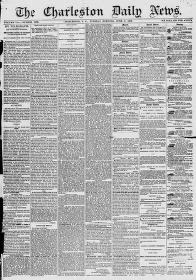

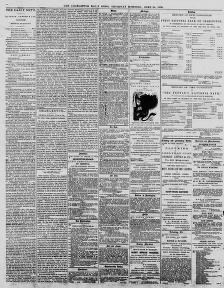
📍 Charleston, South Carolina — March 27, 1869
Keywords: Charleston history, Charleston Reconstruction era, Charleston newspaper archives, Charleston walking tour, Charleston ghost tour, Charleston historical research
🧭 What Was Happening in Charleston on March 27, 1869?
On March 27, 1869, The Charleston Daily News printed a snapshot of a city still reeling from the Civil War and navigating the uncertain terrain of Reconstruction.
This wasn’t a polished narrative.
This was Charleston mid-rebuild—socially, politically, and emotionally.
⚡ The city you walk through today was:
Under federal Reconstruction governance
Experiencing deep political division
Rebuilding its economy and port activity
Redefining power, identity, and citizenship
👉 And the newspaper captured all of it—in real time.
📰 What the Newspaper Actually Shows
Unlike modern storytelling, 19th-century newspapers weren’t curated for comfort. They were dense, messy, and revealing.
Inside this March 27 issue, you’ll find:
🏛️ Government & Political Updates
Ongoing shifts in leadership, Reconstruction policies, and federal oversight.
⚖️ Court Cases & Legal Notices
Public records of disputes, arrests, and civil restructuring—Charleston working through conflict on paper.
🚢 Shipping & Commerce
The port remained active, signaling economic survival despite instability.
💰 Advertisements & Daily Life
Boarding houses, goods, services—life continuing alongside upheaval.
🎭 The Emotional Layer: How People Felt
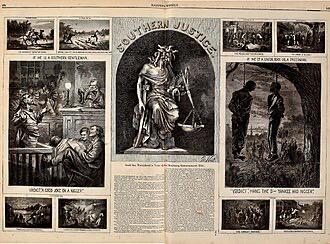
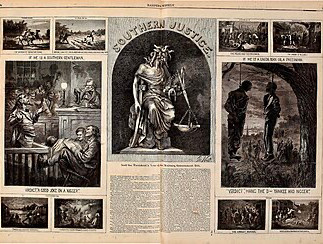


While newspapers documented events, political cartoons revealed something deeper: emotion, fear, anger, and perspective.
One powerful example from this era is Southern Justice, a nationally circulated cartoon responding to violence in South Carolina during Reconstruction.
🧠 Together, they tell a fuller story:
📰 Newspapers = What happened
🎭 Cartoons = How people processed it
🧠 Interpreting This Moment (FACT vs CONTEXT)
✅ Documented FACT:
Charleston was under Reconstruction governance in 1869
Newspapers like The Charleston Daily News reported daily political, legal, and economic activity
National media and artists were reacting to events in South Carolina
🧩 Historical CONTEXT:
The city was navigating massive systemic change
Power structures were shifting rapidly
Public opinion was deeply divided
🌫️ INTERPRETATION (Belief-Neutral):
Some historians and visitors alike describe Reconstruction-era Charleston as carrying a kind of emotional residue—a weight tied to upheaval, uncertainty, and identity.
We approach that idea with curiosity, not assumption:
If a place holds intense human experiences, it may also hold the stories people continue to feel.
🎤 If You’re Standing in Charleston Right Now…
Pause for a moment.
Look around.
Then imagine:
Headlines being read aloud on street corners
Debates happening in taverns and boarding houses
Ships arriving with goods—and news
A city trying to define what comes next
🔍 Why This Matters Today
Charleston’s history isn’t just preserved in buildings—it’s preserved in records, reactions, and voices.
Newspapers like this one remind us:
History isn’t one clean story.
It’s layers of facts, opinions, and lived experiences—stacked on top of each other.
👻 From Headlines to Hauntings
At History, Haunts, & Hahas!, we don’t separate history from experience—we connect them.
Because sometimes, understanding a place’s past helps explain why it still feels the way it does today.
🔗 Book a Tour / Learn More
👉 Explore Charleston through history, hauntings, and humor:
📧 Custom private tours available:
📚 Sources & Citations
Library of Congress – The Charleston Daily News, March 27, 1869
Harper's Weekly – Reconstruction-era political cartoons
South Carolina Encyclopedia – Reconstruction overview
Not a ghost story… a human story.
And sometimes, those are the ones that stay with you the longest.”


Comments