


How to Capture Credible Paranormal Evidence (and Avoid Camera Tricks & Brain Biases)
- History, Haunts, & Hahas!
- Feb 1
- 4 min read
Updated: 7 days ago

Cameras, Orbs, and Ghost Photos: What Science Explains — and Where Curiosity Still Lives
Whether you’re out on a nighttime investigation, reviewing a ghost tour photo, or staring at a glowing orb in your image wondering what just happened, it helps to understand how cameras, human perception, and infrared detection interact—and why even sincere observers can be misled.
At History, Haunts, & Hahas!, we’re a small, mom-owned Charleston ghost tour business, and we don’t ghost light people. That means we won’t exaggerate, dismiss, or force interpretations that aren’t supported by evidence—but we also won’t reject your experience outright. If something is real to you, it’s real enough to be examined thoughtfully.
We explore the spooky with curiosity, transparency, and critical thinking—leaving room for unanswered questions.
📷 Why Your Camera Might Be Telling a Different Story Than Your Eyes
🔦 Backscatter Artifacts (Why “Orbs” Often Aren’t What They Seem)
One of the most common photographic anomalies reported in ghost photos—often called orbs—can be explained by backscatter. This occurs when a camera’s flash reflects off tiny particles close to the lens, such as dust, pollen, moisture, or insects. Because these particles are out of focus and illuminated suddenly, they appear as bright, circular shapes in photos.
Importantly, these particles are usually not visible to the naked eye at the time the photo is taken—only to the camera sensor.
What this means:
If something appears only in the photo and not in your direct visual experience, backscatter is a strongpossibleexplanation—not a judgment about what you felt or noticed in the moment.
Source:
– National Institutes of Health / PubMed Central (optics and flash artifact research)
💡 Lighthearted reminder: If the “entity” moves exactly with your camera, odds are high it’s not paranormal. The only ghost known to do that reliably is the ghost of Steve Jobs.
🌘 Flash, Night Mode, and Why Darkness Complicates Everything
Modern cameras are excellent—but they’re also eager to help, sometimes too eager.
Flash can dramatically increase backscatter in dusty, humid, or misty environments.
Night mode and long exposure often combine multiple frames to brighten dark scenes. This can create motion blur, light trails, and semi-transparent shapes that look ghostlike even though they’re artifacts of image processing.
Sources:
–Skeptical Inquirer, photography and low-light artifact analysis
📸 Better Practices
Avoid flash in dark, dusty, or foggy conditions
Use Live Photos or video, which provide context before and after the image
Remember: slow shutter speeds + movement = visual distortions that feel meaningful but are mechanically predictable
🌡️ Infrared, Thermal Imaging, and the Limits of What Cameras “See”
Infrared (IR) and thermal cameras detect wavelengths and heat differences outside human vision. Our eyes simply cannot see this portion of the electromagnetic spectrum.
What IR cameras actually show:
Heat differentials
Reflective materials
Environmental motion
Sensor noise and interference
Source:
– National Institute of Standards and Technology (NIST), infrared imaging fundamentals
Some paranormal interpretations suggest that entities may be more visible in infrared because human vision can’t detect them. While that idea is compelling—and culturally common—there is currently no empirical evidence demonstrating that ghosts or spirits exist as energy forms uniquely detectable in IR.
That said, the absence of validation does not equal proof of impossibility. It simply marks the boundary between established science and open questions.
🧠 Your Brain Is a Pattern-Finding Machine (By Design)
Even with flawless equipment, human perception plays a major role in interpretation.
Well-established cognitive phenomena include:
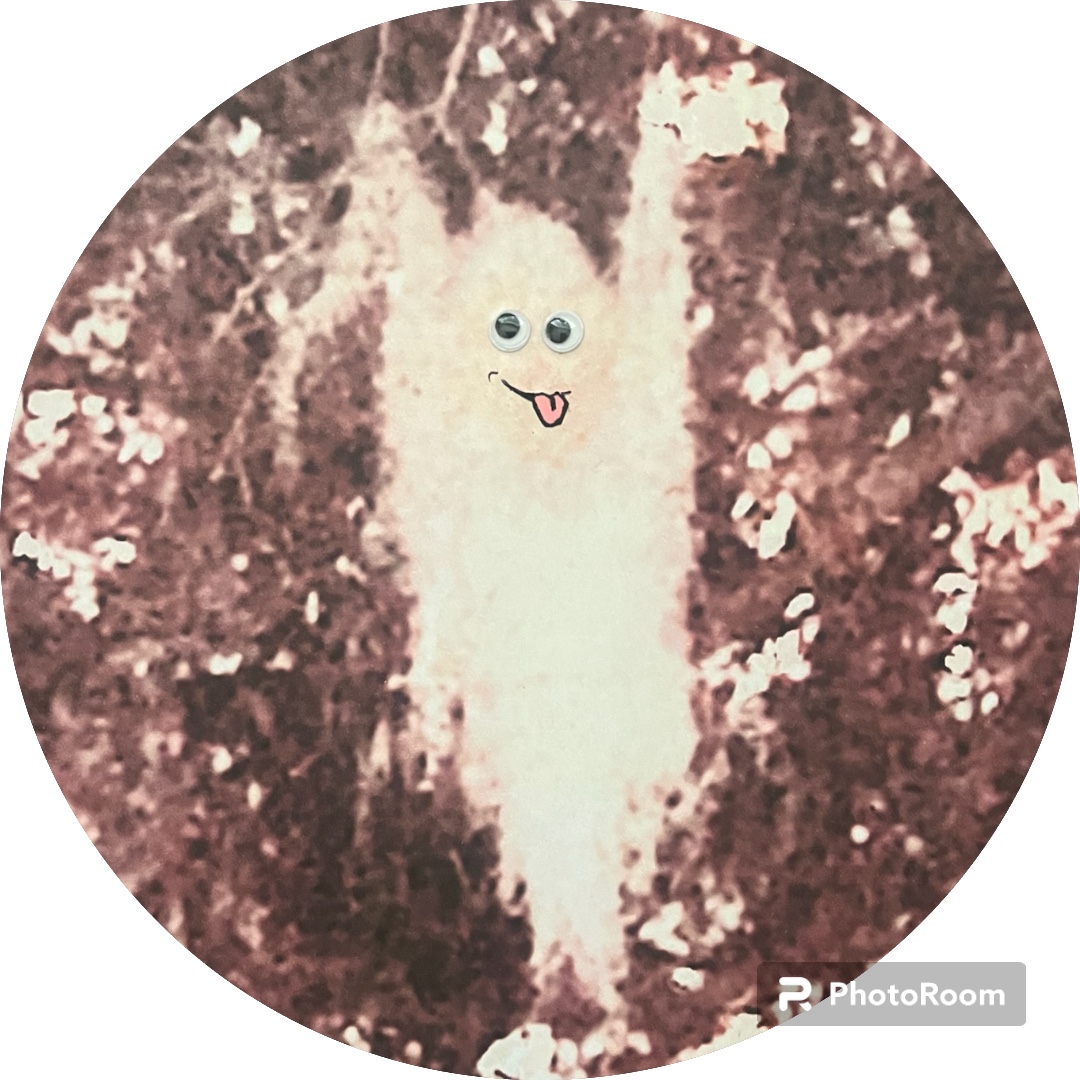
Pareidolia — the tendency to see faces or figures in random patterns
Rapid face detection — the human brain can register “faces” in under 150 milliseconds, even when none exist
Low-light ambiguity — shadows, reflections, and texture become easier to misinterpret when visual information is limited
These are not flaws. They’re survival adaptations—and they help explain why certain images feel immediately meaningful.
Sources:
– NIH / PubMed Central (pareidolia research)
– University of Queensland (face-perception timing studies)
– Johns Hopkins University (visual cognition summaries)
🔍 Evaluating Ghost Photos with Respect and Rigor
If you want to examine images responsibly—without dismissing yourself or jumping to conclusions—try this:
Ask whether the anomaly was visible without the camera
Compare photos taken with and without flash
Review video or Live Photos for movement consistency
Consider lens flare, reflections, and sensor artifacts—especially near bright light sources
Source:
– Optical artifact analysis in multi-element lenses (television and imaging research literature)
🧩 A Science-Informed Investigation Checklist
✔ Form a hypothesis before recording
✔ Collect baseline environmental data
✔ Use multiple recording formats
✔ Note conditions: humidity, dust, lighting, reflective surfaces
✔ Attempt replication
✔ Prioritize known physical explanations first
This approach doesn’t deny the paranormal—it simply respects how discovery works.
Source:
–Skeptical Inquirer, methodology in anomalous investigation
Note: Ghosts, spirits, or non-physical entities—if they exist—remain speculative within current scientific frameworks. While some theories explore energy, consciousness, or plasma-based phenomena, none have produced reproducible evidence linking such models to photographic or infrared manifestations. This remains an open, theoretical area rather than an established one.
🤝 Come Ghost Hunt With Us — Without Ghostlighting
At History, Haunts, & Hahas!, we blend:
✨ Lowcountry history and folklore
🔍 Observation grounded in science
📸 Photography tips you can actually use
🤝 Small, mom-owned business care and honesty
We won’t tell you what to believe—but we will help you document responsibly, interpret thoughtfully, and enjoy the mystery.
And remember: the only ghost guaranteed to move with your camera… is still Steve Jobs.
📚 References & Further Reading
Backscatter & optical artifacts — NIH / PubMed Central
Night photography and long exposure effects — Skeptical Inquirer
Pareidolia and visual cognition — NIH / PMC
Human face-perception timing — University of Queensland
Visual pattern recognition — Johns Hopkins University
Infrared and thermal imaging fundamentals — NIST


Comments