


What Science Says About Lowcountry Cryptids and Why the Legends Persist
- History, Haunts, & Hahas!
- 6 days ago
- 4 min read
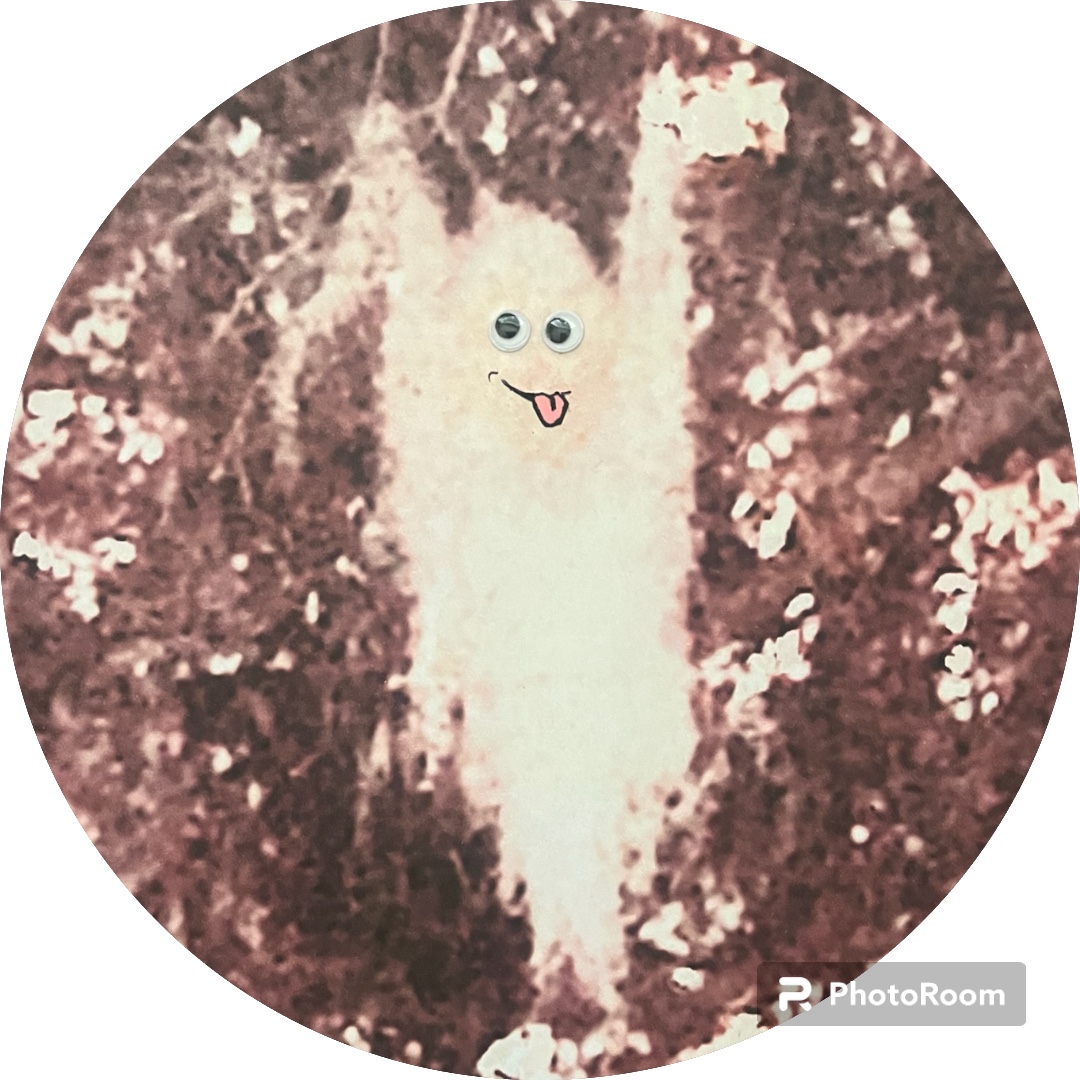

What Science Says About Lowcountry Cryptids — and Why the Legends Persist
From the swamps near Bishopville to the tidal marshes surrounding Charleston, the South Carolina Lowcountry has long been home to stories of mysterious creatures—cryptids that live in oral tradition, local lore, tourism narratives, and late-night campfire conversations.
This article does not exist to tell anyone what they should or should not believe.
Instead, it explores how cryptid legends persist by looking at patterns—across psychology, culture, environment, and history—while leaving room for unanswered questions. If an experience is real to you, then it is real enough to deserve respect. What follows is an exploration of how science, folklore, and human perception intersect, not a rejection of lived experience.

🐊 The Lizard Man of Scape Ore Swamp — A Lowcountry Legend
One of South Carolina’s most famous cryptid stories is the Lizard Man of Scape Ore Swamp, first gaining widespread attention in 1988 near Bishopville after reports of a vehicle being damaged and eyewitnesses describing a large, bipedal, reptilian figure emerging from the swamp.
No verified biological specimen has ever been documented, and no zoological evidence has confirmed the existence of a previously unknown reptilian humanoid species. However, the story rapidly became part of local identity, tourism, and regional folklore—demonstrating how powerful a shared narrative can be, regardless of unresolved biological questions.
Importantly, the absence of physical evidence does not negate the sincerity of reported experiences. History repeatedly shows that phenomena often exist in an unresolved space long before explanatory frameworks or tools catch up.
Context: Animals such as the platypus and giant squid were once dismissed as myth or exaggeration until physical evidence confirmed their existence. This does not mean every cryptid will one day be proven—but it does remind us that certainty has often aged poorly.
Sources:
Smithsonian Magazine,The History of the Giant Squid
Australian Museum,Early European Accounts of the Platypus
🧠 Why Cryptid Experiences Feel Real — Insights from Psychology
Psychological research does not frame cryptid belief as gullibility or pathology. Instead, it examines how human cognition interprets ambiguity, especially in emotionally charged or unfamiliar environments.
Pattern Recognition & Meaning-Making
Humans evolved to detect patterns quickly—a survival trait that helps us identify threats, opportunities, and social meaning. In environments like swamps, forests, and marshlands—where visibility is limited and sensory input is ambiguous—this pattern recognition can amplify uncertainty into meaningful interpretation.
Psychologists describe this as illusory pattern perception, a normal cognitive process where the brain fills in gaps when information is incomplete.
Sources:
Whitson & Galinsky (2008),Lacking Control Increases Illusory Pattern Perception,Science
Shermer (2011), Patternicity, Scientific American
Belief, Intuition, and Interpretation
Large-scale studies show that people differ in how they weigh intuition, narrative, and analytical reasoning. Individuals who rely more on intuitive processing often report richer subjective experiences and greater openness to anomalous explanations.
This does not indicate error or delusion—it reflects cognitive diversity in how humans make sense of the world.
Sources:
Pennycook et al. (2012),Cognitive Style and Religious/Paranormal Belief,Cognition
Lindeman & Aarnio (2007),Intuitive Thinking and Supernatural Beliefs,Journal of Cognitive Psychology
Reality, Experience, and Interpretation
Some research explores how people evaluate internal experience versus external verification. Rather than framing this as a flaw, modern psychology recognizes it as a spectrum of meaning-making—one that plays a key role in creativity, spirituality, folklore, and storytelling.
These traits help explain why cryptid narratives feel compelling and persist across generations, not why people are “wrong.”
Sources:
Irwin (2009),The Psychology of Paranormal Belief, University of Hertfordshire
French & Stone (2014),Anomalistic Psychology, Palgrave Macmillan
📚 Cryptids as Cultural Memory and Collective Storytelling
Cryptid legends are not just individual experiences—they are cultural artifacts.
Folklorists describe legends as stories that survive because they evolve, adapt, and resonate emotionally. They are transmitted socially, reinforced through repetition, and shaped by regional identity.
This is sometimes described through concepts such as collective memory, shared narrative, or even conceptual haunting—where ideas persist in a place or culture long after their origins fade.
Sources:
Dégh & Vázsonyi (1975),Legend and Belief,Folklore
Tangherlini (1990),Folklore, Myth, and Legend,Western Folklore
🐍 Lowcountry Cryptids and Place-Based Meaning
In the Lowcountry, cryptid legends often reflect environmental and historical context:
Swamps — liminal landscapes associated with uncertainty, concealment, and transformation
Marshes and tidal zones — spaces that shift constantly, reinforcing ambiguity
Post-colonial landscapes — shaped by displacement, labor trauma, and layered history
These stories may not be biologically verified, but they are undeniably real as expressions of how people relate to place.
🧬 What Science Can — and Can’t — Say About Cryptids
Mainstream biology requires physical, reproducible evidence to confirm new species. By that standard, cryptids remain unverified.
However, science is not limited to biology.
Psychology, anthropology, folklore studies, and sociology all treat cryptid reports as valuable data—not about unknown animals, but about human perception, culture, memory, and meaning.
Importantly:
A lack of biological confirmation does not mean experiences are fabricated
Absence of evidence is not evidence of absence
History demonstrates that some discoveries arrive long after disbelief
Sources:
National Academy of Sciences,Standards of Evidence in Biological Discovery
University of California Press,Folklore: Critical Concepts in Literary and Cultural Studies
🎯 What Cryptid Legends Teach Us
Cryptid legends persist because:
Emotionally charged stories are memorable and transmissible
Humans seek meaning in ambiguous environments
Social reinforcement strengthens shared narratives
Truth often emerges from overlapping perspectives, not singular certainty
Each witness, skeptic, believer, and researcher holds a piece of the puzzle.
Once we believe we know everything, that is often when we stop learning anything at all.
📌 Takeaway
Lowcountry cryptids are not meaningless stories.
They are cultural phenomena rooted in psychology, environment, history, and collective imagination. Science has not confirmed creatures like the Lizard Man—but science does help explain why people experience, remember, and share these stories so vividly.
If something is real to you, it is real enough to be respected.
And history reminds us that certainty is temporary—but curiosity lasts.
Selected Sources & Further Reading
Whitson & Galinsky, Science (2008)
Pennycook et al., Cognition (2012)
Irwin, The Psychology of Paranormal Belief
French & Stone, Anomalistic Psychology
Dégh & Vázsonyi, Folklore
Smithsonian Magazine (Giant Squid history)
Australian Museum (Platypus discovery history)
If


Comments