


WHO THE MANIGAULTS WERE (IN CHARLESTON TERMS)
- History, Haunts, & Hahas!
- 6 days ago
- 3 min read

A Charleston-Only Historical Guide
(Merchants, Politicians, Architects, and One Very Extra House)
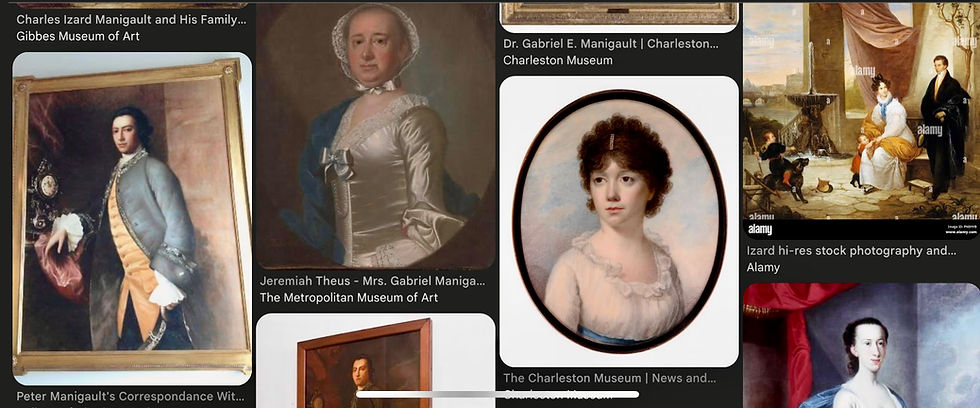
The Manigault family were French Huguenot descendants who became one of Charleston’s most influential urban elite families in the late 18th and early 19th centuries. Their power came not from piracy or plantations alone, but from commerce, politics, architecture, and social networks centered in Charles Town / Charleston.
They are important because:
They shaped Charleston’s built environment
They moved between merchant class and political power
Their surviving house gives us one of the best-preserved elite domestic interiors in the city
CORE FAMILY MEMBERS (CHARLESTON-RELEVANT ONLY)
Gabriel Manigault (1704–1781)
Role: Patriarch, merchant, colonial official
Why he matters:
Gabriel Manigault was a successful Charleston merchant and served asSpeaker of the South Carolina House of Commons. His wealth and political standing positioned the Manigaults as part of Charleston’s ruling class well before the American Revolution.
Charleston footprint:
Active in Charles Town politics and trade
Established the family’s long-term urban prominence
“Before the Manigault House was a museum, it was the culmination of a political dynasty.”
Joseph Manigault (1763–1843)
Role: Wealthy rice planter, elite Charleston resident
Why he matters:
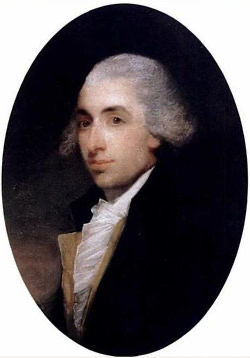
Joseph is the Manigault everyone remembers because his house survives—and because he embodied the post-Revolution Charleston elite: foreign travel, refined taste, and architectural ambition.
Charleston footprint:
Commissioned the Manigault House
Maintained a fashionable urban household in Ansonborough
Represented the wealth created by enslaved labor, even when not physically present in the city
Important clarity:
Joseph Manigault was not primarily a Charleston planter in the agricultural sense. Charleston was where wealth was displayed and administered, not grown.
Francis Manigault (1758–1809)
Role: Architect (credited)
Why he matters:
Francis Manigault is traditionally credited as the architect of the Manigault House, making him one of the earliest American-trained architects working in Charleston.
Charleston footprint:
Associated with refined Federal-style domestic architecture
Represents Charleston’s early architectural self-confidence
Interpretive caution:
Architectural attributions in this period are sometimes tradition-based rather than contract-documented. Best practice is to say“credited to” rather than“designed by” unless discussing scholarly consensus.
THE ANCHOR SITE
Joseph Manigault House
Built: c. 1803
Neighborhood: Ansonborough
Current status:Historic house museum (Historic Charleston Foundation)
Why it matters:
One of the best-preserved Federal townhouses in Charleston
Interior reflects elite tastes: spiral staircase, ornamental plasterwork, controlled light and movement
Urban wealth on display—this is not a spooky ruin, it’s a status object
“This house tells us less about ghosts and more about how Charleston’s elite wanted to be seen.”
ENSLAVEMENT & WEALTH
All Manigault wealth—urban and rural—was entangled with enslaved labor, even when family members were physically residing in Charleston rather than on plantations.
Charleston was a management hub for plantation economies
Elite townhouses functioned as places of control, display, and administration
Enslaved people worked inside the city, not just outside it
This keeps the narrative accurate, ethical, and non-sanitized.
WHAT WE DO NOT CLAIM
To keep this guide clean and credible:
❌ No verified hauntings tied specifically to the Manigault family
❌ No dramatic deaths documented inside the Manigault House
❌ No secret tunnels, cursed objects, or family madness narratives supported by primary sources
That doesn’t make the story boring—it makes it Charleston-honest.
“The Manigaults weren’t pirates or ghosts—they were worse.
They were successful.
This house wasn’t built to scare anyone. It was built to impress, control movement, and broadcast status. If spirits linger here, they wouldn’t be rattling chains—they’d be judging your posture.”
QUICK-REFERENCE TIMELINE (CHARLESTON-ONLY)
1704 — Birth of Gabriel Manigault
Mid-1700s — Manigaults active in Charleston trade and politics
1763 — Birth of Joseph Manigault
c. 1803 — Construction of the Manigault House
1809 — Death of Francis Manigault
1843 — Death of Joseph Manigault
20th c. — House preserved as historic site


Comments